

-
1 mount
ثَبَّتَ \ fasten: to fix firmly: Fasten those buttons. fit: to fix; put into position: I fitted a new handle on (or to) the door. fix: to make firm; fasten: The lamp is fixed to the wall. glue: to keep sth. firmly in one position: His eyes were glued to the window. mount: to fix in position: The guns were mounted on the castle wall. stick: to fasten with some sticky or liquid material: I stuck a stamp on the letter. hold: to put or keep (sth.) in a certain position (with nails, paste, rope or any pressure or support): The rubber ring held him up in the water. A nail held the picture on the wall. -
2 неподвижная установка
1) Military: fixed mount, stationary mount2) Arms production: fixed mount (авиапулемёта)3) Makarov: fixed arrayУниверсальный русско-английский словарь > неподвижная установка
-
3 eingebautes GPS-Gerät
n < navig> ■ fixed-mount GPS -
4 fest installiertes GPS-Gerät
n < navig> ■ fixed-mount GPSGerman-english technical dictionary > fest installiertes GPS-Gerät
-
5 артиллерия на стационарных установках
Русско-английский военно-политический словарь > артиллерия на стационарных установках
-
6 anbringen
v/t (unreg., trennb., hat -ge-)1. (herbeibringen) bring2. (befestigen) (an + Dat) fix (to), fasten (to); TECH. und Am. attach (to); (Schilder etc.) put up, mount (on)3. WIRTS. (Ware) sell4. (Gründe etc.) present; gesprächsweise: mention; (Wort, Witz etc.) get in; (sein Wissen) display, show off; (Verbesserungen etc.) make, carry out; eine Beschwerde anbringen lodge a complaint5. umg. anbekommen* * *to fix up; to affix; to attach* * *ạn|brin|genvt sep1) (= befestigen) to fix, to fasten (an +dat (on)to); (= aufstellen, aufhängen) to put up; Telefon, Feuermelder etc to put in, to install; Stiel an Besen to put on; Beschläge, Hufeisen to mount; Komma to insert2) (= äußern) Bemerkung, Bitte, Gesuch, Beschwerde to make (bei to); Kenntnisse, Wissen to display; Argument to useer konnte seine Kritik nicht mehr anbringen — he couldn't get his criticism in
See:→ auch angebracht3) (= hierherbringen) to bring (with one); (nach Hause) to bring home (with one)4) (inf = loswerden) Ware to get rid of (inf)* * *1) affix2) (to put (something) in position: You must fit a new lock on the door.) fit3) (to attach; to join: He fixed the shelf to the wall.) fix4) (to hang or put up on a stand, support etc: He mounted the tiger's head on the wall.) mount* * *an|brin·gen1. (befestigen)2. (montieren)Beschläge \anbringen to attach [or mount] fittingsein Gerät \anbringen to install a piece of equipmentein Regal \anbringen to put up a shelf3. (vorbringen)▪ etw \anbringen to introduce [or mention] sth4. (äußern)▪ etw [bei jdm] \anbringen to make sth [to sb]5. (verwenden)▪ jdn/etw \anbringen to bring sb/sth [along]7. (fam)▪ etw [bei jdm] \anbringen to sell [or sl flog] sth [to sb]* * *unregelmäßiges transitives Verb1) (befestigen) put up <sign, aerial, curtain, plaque> (an + Dat. on); fix <lamp, camera> (an + Dat. [on] to)an etwas (Dat.) angebracht sein — be fixed [on] to something
2) (äußern) make <request, complaint, comment, reference>3) (zeigen) display, demonstrate <knowledge, experience>4) (ugs.): (herbeibringen) bring5) (ugs.): (verkaufen) sell; move* * *anbringen v/t (irr, trennb, hat -ge-)1. (herbeibringen) bring2. (befestigen) (4. (Gründe etc) present; gesprächsweise: mention; (Wort, Witz etc) get in; (sein Wissen) display, show off; (Verbesserungen etc) make, carry out;eine Beschwerde anbringen lodge a complaint* * *unregelmäßiges transitives Verb1) (befestigen) put up <sign, aerial, curtain, plaque> (an + Dat. on); fix <lamp, camera> (an + Dat. [on] to)an etwas (Dat.) angebracht sein — be fixed [on] to something
2) (äußern) make <request, complaint, comment, reference>3) (zeigen) display, demonstrate <knowledge, experience>4) (ugs.): (herbeibringen) bring5) (ugs.): (verkaufen) sell; move* * *v.to add v.to affix v.to attach v.to mount v. -
7 нагласявам
наглася 1. (приспособявам) fit, fix, adapt, adjust, gear (към, с оглед на to)(среща) arrange, plan, fix, make (an appointment)3. (мъртвец) lay out4. вж нагиздвам5. (муз. инструмент) tune (up)6. нагласявам експонат mount a specimen7. (песен) compose, make up8. (измислям) concoct, put up, fake (up); frame upще нагласим тази работа well fix it, we'll see to itще я нагласим някак we'll fix it up somehowхубаво го нагласи you fixed himнагласявам се9. (приготвям се) prepare, get ready10. вж. нагиздвам седобре се нагласих I've got into a nice messнагласихме се да се срещнем we arranged/agreed to meet* * *наглася̀вам,и нагла̀сям, наглася̀ гл.1. ( приспособявам) fit, fix, adapt, adjust, gear (към, с оглед на to);2. ( уреждам) prepare, organize, arrange; make arrangements (for); ( устройвам) engineer, set up; frame up; plan; ( среща) arrange, plan, fix, make (an appointment);3. ( мъртвец) lay out;5. (муз. инструмент) tune (up);6. ( експонат) mount a specimen;7. ( песен) compose, make up;8. ( измислям) concoct, put up, fake (up); frame up; • той нагласи нещата така, че те да се срещнат he contrived to make them meet; хубаво го нагласи you fixed him; ще нагласим тази работа we’ll fix it, we’ll see to it;\нагласявам се 1. ( приготвям се) prepare, get ready;2. deck o.s. out, dress/doll o.s. up; • добре се нагласих I’ve got into a nice mess.* * *adjust; arrange: We'll нагласявам it somehow. - Ще я нагласим някак си.; frame; install* * *1. (измислям) concoct, put up, fake (up);frame up 2. (муз. инструмент) tune (up) 3. (мъртвец) lay out 4. (песен) compose, make up 5. (приготвям се) prepare, get ready 6. (среща) arrange, plan, fix, make (an appointment) 7. (уреждам) prepare, organize, arrange;make arrangements (for);plan 8. НАГЛАСЯВАМ експонат mount a specimen 9. НАГЛАСЯВАМ сe 10. вж нагиздвам 11. вж. нагиздвам се 12. добре се нагласих I've got into a nice mess 13. нагласихме сe да се срещнем we arranged/agreed to meet 14. наглася (приспособявам) fit, fix, adapt, adjust, gear (към, с оглед на to) 15. хубаво го нагласи you fixed him 16. ще нагласим тази работа well fix it, we'll see to it 17. ще я нагласим някак we'll fix it up somehow -
8 основание плавкого предохранителя
основание плавкого предохранителя
Несъемная часть плавкого предохранителя, снабженная контактами, выводами и, при необходимости, оболочками.
[ ГОСТ Р 50339. 0-2003 ( МЭК 60269-1-98)]
основание предохранителя
основание
Несъемная часть плавкого предохранителя, снабженная контактами и выводами.
[ ГОСТ 17242-86]EN
fuse-base
fuse-mount
the fixed part of a fuse provided with contacts and terminals
[IEV number 441-18-02]
fuse-base
fuse-mount
fixed part of a fuse provided with contacts and terminals
NOTE The fuse-base comprises all the parts necessary for insulation
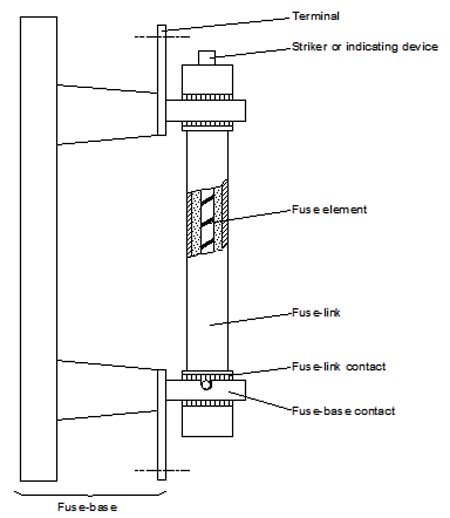
[IEC 60282-1, ed. 7.0 (2009-10)]FR
socle
partie fixe d'un fusible munie de contacts et de bornes
[IEV number 441-18-02]
socle
partie fixe d'un fusible munie de contacts et de bornes
NOTE Le socle comprend tous les éléments assurant l'isolement
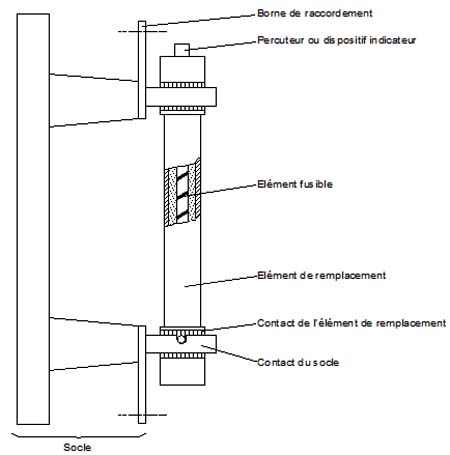
[IEC 60282-1, ed. 7.0 (2009-10)]Тематики
Обобщающие термины
Синонимы
EN
DE
FR
Русско-английский словарь нормативно-технической терминологии > основание плавкого предохранителя
-
9 fijar
v.1 to fix.Ella fijó las velas She fixed the sails.Ella fijó su atención She fixed her attention.2 to set, to fix (establecer) (fecha, precio).fijar el domicilio to take up residencefijar la mirada/la atención en to fix one's gaze/attention on3 to determine, to define, to establish, to set.Ella fijó las reglas She determined the rules.* * *2 (pegar) to stick3 (establecer) to set, determine, fix4 (en fotografía, química) to fix1 (hacerse fijo) to settle2 (darse cuenta) to notice■ ¿te fijaste en el color de sus ojos? did you notice the colour of his eyes?3 (poner atención) to pay attention, watch\fijar la vista to stare (en, at)fijar los ojos to stare (en, at)fijar residencia to take up residence¡fíjate! (just) fancy that!'Prohibido fijar carteles' "Post no bills"* * *verb1) to fix2) establish, set up3) appoint4) fasten•- fijarse- fijarse en* * *1. VT1) (=sujetar) (tb Fot) to fix; [con clavos] to secure; [con pegamento] to glue; [con chinchetas] to pin up; [+ pelo] to set2) (=centrar) [+ atención] to focus (en on)[+ ojos] to fix (en on)pero fijemos nuestra atención en otros aspectos del asunto — but let us focus our attention on other aspects of the matter
le contestó sin vacilar, fijando la mirada en sus ojos — she answered him directly, looking him straight in the eye
3) (=determinar) [+ fecha, hora, precio, plazo] to fix, set; [+ límites, servicios mínimos] to establish; [+ condiciones] to lay downno hemos fijado aún la fecha de la boda — we haven't fixed o set a date for the wedding yet
fijaron un plazo de dos meses para llegar a un acuerdo — they set a two-month deadline for an agreement to be reached
el Tratado de 1942 fijó los límites entre Perú y Ecuador — the 1942 Treaty established the border between Peru and Ecuador
la organización ha fijado tres condiciones para volver a la mesa de negociaciones — the organization laid down three conditions for their return to the negotiating table
el plazo fijado por la ley — the time period established o laid down by law
4) [+ residencia] to take up2.See:* * *1.verbo transitivo1)a) (poner, clavar) to fixb) <foto/dibujo> to fix2)a) < residencia>b) <fecha/cifra/precio> to setc) reglamento/ley to state2.según fija el reglamento — as stated in o dictated by the regulations
fijarse v prona) ( prestar atención)si no te fijas en lo que haces, lo vas a hacer mal — if you don't watch o pay attention to what you're doing, you'll do it wrong
es muy observador, se fija en todo — he's very observant, he notices everything
b) ( darse cuenta) to notice¿te has fijado en que no discuten nunca? — have you noticed that they never quarrel?
fíjate qué terrible — it was (o would be etc) awful
* * *= attach, fix, set, brace, fasten together, clamp, lay down, fasten, set forth, clip, peg.Ex. In fixed location notation was physically attached to certain places on the shelves and books were always filed in the same place.Ex. One of the functions which I have not specified is that the underlying ideology represented by the AACR aims first at fixing a location for an author and then for a work.Ex. If no fines are to be charged for a particular combination of borrower and material type, set the maximum fine to zero.Ex. The cheeks were braced from their tops to the ceiling, to prevent the press from twisting or shifting about in use.Ex. A book is physically a collection of sheets usually paper ones fastened together and protected by a cover which do form a genuine unit.Ex. The original is clamped around the left hand cylinder and a special stencil fastened around the other cylinder.Ex. A table is set up in a classroom, books are laid out on it by pupil 'shop assistants' supervised by a rota of teachers, and regular opening hours are laid down and adhered to.Ex. The original is clamped around the left hand cylinder and a special stencil fastened around the other cylinder.Ex. She sets forth some of the conditions which may have led to this situation in the hope that it may bring about further study.Ex. Plastic-covered wire or metal supports are designed to clip firmly to the shelf itself or to the base of the shelf above.Ex. As per estimates, the demand for armoured vehicles in the defence forces is pegged at about 2000 vehicles per year.----* fijar fecha con antelación = predate.* fijar la atención = fix + Posesivo + attention.* fijar la mirada = fasten + glance.* fijar las especificaciones de algo = set + specifications.* fijar precios = price, fix + price.* fijar precios altos = price + high.* fijar precios bajos = price + low.* fijarse = set up + camp.* fijarse una meta = set + goal.* fijarse una tarea = set + Reflexivo + task.* fijarse un objetivo = set + goal.* fijar una nota en un sitio público = post.* fijar un color = fix + colour.* fijar un límite = set + cut-off point.* * *1.verbo transitivo1)a) (poner, clavar) to fixb) <foto/dibujo> to fix2)a) < residencia>b) <fecha/cifra/precio> to setc) reglamento/ley to state2.según fija el reglamento — as stated in o dictated by the regulations
fijarse v prona) ( prestar atención)si no te fijas en lo que haces, lo vas a hacer mal — if you don't watch o pay attention to what you're doing, you'll do it wrong
es muy observador, se fija en todo — he's very observant, he notices everything
b) ( darse cuenta) to notice¿te has fijado en que no discuten nunca? — have you noticed that they never quarrel?
fíjate qué terrible — it was (o would be etc) awful
* * *= attach, fix, set, brace, fasten together, clamp, lay down, fasten, set forth, clip, peg.Ex: In fixed location notation was physically attached to certain places on the shelves and books were always filed in the same place.
Ex: One of the functions which I have not specified is that the underlying ideology represented by the AACR aims first at fixing a location for an author and then for a work.Ex: If no fines are to be charged for a particular combination of borrower and material type, set the maximum fine to zero.Ex: The cheeks were braced from their tops to the ceiling, to prevent the press from twisting or shifting about in use.Ex: A book is physically a collection of sheets usually paper ones fastened together and protected by a cover which do form a genuine unit.Ex: The original is clamped around the left hand cylinder and a special stencil fastened around the other cylinder.Ex: A table is set up in a classroom, books are laid out on it by pupil 'shop assistants' supervised by a rota of teachers, and regular opening hours are laid down and adhered to.Ex: The original is clamped around the left hand cylinder and a special stencil fastened around the other cylinder.Ex: She sets forth some of the conditions which may have led to this situation in the hope that it may bring about further study.Ex: Plastic-covered wire or metal supports are designed to clip firmly to the shelf itself or to the base of the shelf above.Ex: As per estimates, the demand for armoured vehicles in the defence forces is pegged at about 2000 vehicles per year.* fijar fecha con antelación = predate.* fijar la atención = fix + Posesivo + attention.* fijar la mirada = fasten + glance.* fijar las especificaciones de algo = set + specifications.* fijar precios = price, fix + price.* fijar precios altos = price + high.* fijar precios bajos = price + low.* fijarse = set up + camp.* fijarse una meta = set + goal.* fijarse una tarea = set + Reflexivo + task.* fijarse un objetivo = set + goal.* fijar una nota en un sitio público = post.* fijar un color = fix + colour.* fijar un límite = set + cut-off point.* * *fijar [A1 ]vtA1 (poner, clavar) ‹poste› to fixfija bien la estantería a la pared fix the shelving securely to the wall[ S ] prohibido fijar carteles stick no billsfijó la mirada en el horizonte she fixed her gaze on the horizonconviene fijar la atención en este punto it's important to focus our attention on this pointhabía fijado la mente en el pasado he had focused his mind on the past2 ‹foto/dibujo› to fix1 ‹residencia›fijaron su residencia en París they established their residence o took up residence in Paris2 (concretar) ‹fecha/cifra› to setya han fijado la fecha they've already set o fixed the datetodavía no hemos fijado el precio we still haven't agreed (on) a pricede acuerdo con la política fijada por el partido in accordance with the policy set o established by the party3 «reglamento/ley» to statela ley fija que … the law states that …según fija el reglamento as stated in o dictated by the regulations■ fijarse1(prestar atención): fíjate bien en el palacio, es una obra de arte take a good look at the palace, it's a work of artes muy observador, se fija en todo he's very observant, he notices everythingfíjate bien en cómo lo hace watch carefully how she does itsi no te fijas, lo vas a volver a hacer mal if you don't watch what you're doing, you're going to do it wrong again2 (darse cuenta) to notice¿te has fijado en que no discuten nunca? have you noticed that o how they never quarrel?en seguida se fijó en ella he noticed her immediately¡fíjate lo que ha crecido! just look how she's grown!fíjate qué faena, se lo robaron todo can you imagine how awful? they stole everything he hadestarás contenta con el regalo — ¡fíjate! you must be pleased with the present — you bet! ( colloq)* * *
fijar ( conjugate fijar) verbo transitivo
1
( on signs) prohibido fijar carteles stick no bills;
2
fijarse verbo pronominala) ( prestar atención):
fíjate en lo que haces watch o pay attention to what you're doing
◊ ¿te has fijado en que no discuten nunca? have you noticed that they never quarrel?;
¡fíjate lo que ha crecido! just look how she's grown!
fijar verbo transitivo
1 to fix: se prohíbe fijar carteles, (en letrero) post no bills
2 (la atención, los ojos, etc) fijar la vista en algo, to fix one's eyes on
3 (acordar, establecer) to set: fija el día y la hora, set a date
' fijar' also found in these entries:
Spanish:
cartel
- prohibida
- prohibido
- sujetar
- tasar
- asegurar
- residencia
- señalar
English:
anchor
- appoint
- arrange
- attention span
- fasten
- fix
- name
- peg
- post
- set
- settle
- stick up
- tack down
- affix
- mount
- sort
- time
* * *♦ vt1. [asegurar, sujetar] to fix (a o en onto); [cartel] to stick up;[sello] to stick on;fijaron las patas al suelo con clavos they nailed the legs to the floor;2. [establecer] to fix;se fijaron como objetivo acabar el año con beneficios they set themselves the target of ending the year in profit;fijar la mirada/la atención en to fix one's gaze/attention on3. [fecha, precio] to set, to fix4. [significado] to establish;fijar el domicilio to take up residence* * *v/t3 residencia establish4 atención focus* * *fijar vt1) : to fasten, to affix2) establecer: to establish, to set up3) concretar: to set, to fixfijar la fecha: to set the date* * *fijar vb"prohibido fijar carteles" "stick no bills"3. (dirigir) to focus / to turnfijar la mirada / fijar la vista to stare -
10 Á
* * *a negative suffix to verbs, not;era útmakligt, at it is not unmeet that.* * *1.á, prep., often used elliptically, or even adverbially, [Goth. ana; Engl. on; Germ. an. In the Scandinavian idioms the liquid n is absorbed. In English the same has been supposed to happen in adverbial phrases, e. g. ‘along, away, abroad, afoot, again, agate, ahead, aloft, alone, askew, aside, astray, awry,’ etc. It is indeed true that the Ormulum in its northern dialect freq. uses o, even in common phrases, such as ‘o boke, o land, o life, o slæpe, o strande, o write, o naht, o loft,’ etc., v. the glossary; and we may compare on foot and afoot, on sleep (Engl. Vers. of Bible) and asleep; A. S. a-butan and on-butan (about); agen and ongean (again, against); on bæc, aback; on life, alive; on middan, amid. But it is more than likely that in the expressions quoted above, as well as in numberless others, as well in old as in modern English, the English a- as well as the o- of the Ormulum and the modern Scottish and north of England o- are in reality remains of this very á pronounced au or ow, which was brought by the Scandinavian settlers into the north of England. In the struggle for supremacy between the English dialects after the Conquest, the Scandinavian form á or a won the day in many cases to the exclusion of the Anglo-Saxon on. Some of these adverbs have representatives only in the Scandinavian tongues, not in Anglo-Saxon; see below, with dat. B. II, C. VII; with acc. C. I. and VI. The prep. á denotes the surface or outside; í and ór the inside; at, til, and frá, nearness measured to or from an object: á thus answers to the Gr. επί; the Lat. in includes á and i together.]With dat. and acc.: in the first case with the notion of remaining on a place, answering to Lat. in with abl.; in the last with the notion of motion to the place, = Lat. in with acc.WITH DAT.A. Loc.I. generally on, upon; á gólfi, on the floor, Nj. 2; á hendi, on the hand (of a ring), 48, 225; á palli, 50; á steini, 108; á vegg, 115; á sjá ok á landi, on sea and land. In some instances the distinction between d and i is loose and wavering, but in most cases common sense and usage decide; thus ‘á bók’ merely denotes the letters, the penmanship, ‘í’ the contents of a book; mod. usage, however, prefers ‘í,’ lesa í bók, but stafr á bók. Old writers on the other hand; á bókum Enskum, in English books, Landn. 24, but í Aldafars bók, 23 (in the book De Mensurâ Temporum, by Bede), cp. Grág. i. 76, where á is a false reading instead of at; á bréfi, the contents of a letter: of clothing or arms, mítr á höfði, sverð á hlið, mitre on head, sword on side, Fms. i. 266, viii. 404; hafa lykil á sér, on one’s person, 655 xxvii. 22; möttull á tyglum, a mantle hanging on (i. e. fastened by) laces, Fms. vii. 201: á þingi means to be present at a meeting; í þingi, to abide within a jurisdiction; á himni, á jörðu, on (Engl. in) heaven and earth, e. g. in the Lord’s Prayer, but í helviti, in hell; á Gimli, Edda (of a heavenly abode); á báti, á skipi denote crew and cargo, ‘í’ the timber or materials of which a ship is built, Eg. 385; vera í stafni á skipi, 177: á skógi, to be abroad in a wood (of a hunter, robber, deer); but to be situated (a house), at work (to fell timber), í skógi, 573, Fs. 5, Fms. iii. 122, viii. 31, xi. 1, Glúm. 330, Landn. 173; á mörkinni, Fms. i. 8, but í mörk, of a farm; á firðinum means lying in a firth, of ships or islands (on the surface of the water), þær eyjar liggja á Breiðafirði, Ld. 36; but í firði, living in a district named Firth; á landi, Nj. 98, Fms. xi. 386.II. á is commonly used in connection with the pr. names or countries terminating in ‘land,’ Engl. in, á Englandi, Írlandi, Skotlandi, Bretlandi, Saxlandi, Vindlandi, Vínlandi, Grænalandi, Íslandi, Hálogalandi, Rogalandi, Jótlandi, Frakklandi, Hjaltlandi, Jamtalandi, Hvítramannalandi, Norðrlöndum, etc., vide Landn. and the index to Fms. xii. In old writers í is here very rare, in modern authors more frequent; taste and the context in many instances decide. An Icelander would now say, speaking of the queen or king, ‘á Englandi,’ ruling over, but to live ‘í Englandi,’ or ‘á Englandi;’ the rule in the last case not being quite fixed.2. in connection with other names of countries: á Mæri, Vörs, Ögðum, Fjölum, all districts of Norway, v. Landn.; á Mýrum (in Icel.), á Finnmörk, Landn., á Fjóni (a Danish island); but í Danmörk, Svíþjóð (á Svíþjóðu is poët., Gs. 13).3. before Icel. farms denoting open and elevated slopes and spaces (not too high, because then ‘at’ must be used), such as ‘staðr, völlr, ból, hjalli, bakki, heimr, eyri,’ etc.; á Veggjum, Landn. 69; á Hólmlátri, id.: those ending in ‘-staðr,’ á Geirmundarstöðum, Þórisstöðum, Jarðlangsstöðum…, Landn.: ‘-völlr,’ á Möðruvöllum: á Fitjum (the farm) í Storð (the island), í Fenhring (the island) á Aski (the farm), Landn., Eg.: ‘-nes’ sometimes takes á, sometimes í (in mod. usage always ‘í’), á Nesi, Eb. 14, or í Krossnesi, 30; in the last case the notion of island, νησος, prevails: so also, ‘fjörðr,’ as, þeir börðust á Vigrafirði (of a fight o n the ice), Landn. 101, but orusta í Hafrsfirði, 122: with ‘-bær,’ á is used in the sense of a farm or estate, hón sa á e-m bæ mikit hús ok fagrt, Edda 22; ‘í bæ’ means within doors, of the buildings: with ‘Bær’ as pr. name Landn. uses ‘í,’ 71, 160, 257, 309, 332.4. denoting on or just above; of the sun, when the time is fixed by regarding the sun in connection with points in the horizon, a standing phrase in Icel.; sól á gjáhamri, when the sun is on the crag of the Rift, Grág. i. 26, cp. Glúm. 387; so, brú á á, a bridge on a river, Fms. viii. 179, Hrafn. 20; taka hús á e-m, to surprise one, to take the house over his head, Fms. i. 11.III. á is sometimes used in old writers where we should now expect an acc., esp. in the phrase, leggja sverði (or the like) á e-m, or á e-m miðjum, to stab, Eg. 216, Gísl. 106, Band. 14; þá stakk Starkaðr sprotanum á konungi, then Starkad stabbed the king with the wand, Fas. iii. 34; bíta á kampi (vör), to bite the lips, as a token of pain or emotion, Nj. 209, 68; taka á e-u, to touch a thing, lay hold of it, v. taka; fá á e-u, id. (poët.); leggja hendr á (better at) síðum, in wrestling, Fms. x. 331; koma á úvart á e-m, to come on one unawares, ix. 407 (rare).B. TEMP. of a particular point or period of time, at, on, in:I. gener. denoting during, in the course of; á nótt, degi, nætrþeli …, Bs. i. 139; or spec. adding a pron. or an adject., á næsta sumri, the next summer; á því ári, þingi, misseri, hausti, vári, sumri …, during, in that year …, Bs. i. 679, etc.; á þrem sumrum, in the course of three summers, Grág. i. 218; á þrem várum, Fms. ii. 114; á hálfs mánaðar fresti, within half a month’s delay, Nj. 99; á tvítugs, sextugs … aldri, á barns, gamals aldri, etc., at the age of …, v. aldr: á dögum e-s, in the days of, in his reign or time, Landn. 24, Hrafn. 3, Fms. ix. 229.II. used of a fixed recurrent period or season; á várum, sumrum, haustum, vetrum, á kveldum, every spring, summer …, in the evenings, Eg. 711, Fms. i. 23, 25, vi. 394, Landn. 292: with the numeral adverbs, cp. Lat. ter in anno, um sinn á mánuði, ári, once a month, once a year, where the Engl. a is not the article but the preposition, Grág. i. 89.III. of duration; á degi, during a whole day, Fms. v. 48; á sjau nóttum, Bárð. 166; á því meli, during that time, in the meantime, Grág. i. 259.IV. connected with the seasons (á vetri, sumri, vári, hausti), ‘á’ denotes the next preceding season, the last winter, summer, autumn, Eb. 40, 238, Ld. 206: in such instances ‘á’ denotes the past, ‘at’ the future, ‘í’ the present; thus í vetri in old writers means this winter; á vetri, last winter; at vetri, next winter, Eb. 68 (in a verse), etc.C. In various other relations, more or less metaphorically, on, upon, in, to, with, towards, against:I. denoting object, in respect of, against, almost periphrastically; dvelja á náðum e-s, under one’s protection, Fms. i. 74; hafa metnað á e-u, to be proud of, to take pride in a thing, 127.2. denoting a personal relation, in; bæta e-t á e-m, to make amends, i. e. to one personally; misgöra e-t á e-m, to inflict wrong on one; hafa elsku (hatr) á e-m, to bear love ( hatred) to one, Fms. ix. 242; hefna sín á e-m, to take revenge on one’s person, on anyone; rjúfa sætt á e-m, to break truce on the person of any one, to offend against his person, Nj. 103; hafa sár á sér, 101; sjá á e-m, to read on or in one’s face; sér hann á hverjum manni hvárt til þín er vel eðr illa, 106; var þat brátt auðséð á hennar högum, at …, it could soon be seen in all her doings, that …, Ld. 22.3. also generally to shew signs of a thing; sýna fáleika á sér, to shew marks of displeasure, Nj. 14, Fs. 14; taka vel, illa, lítt, á e-u, to take a thing well, ill, or indifferently, id.; finna á sér, to feel in oneself; fann lítt á honum, hvárt …, it could hardly be seen in his face, whether …, Eb. 42; líkindi eru á, it is likely, Ld. 172; göra kost á e-u, to give a choice, chance of it, 178; eiga vald á e-u, to have power over …, Nj. 10.II. denoting encumbrance, duty, liability; er fimtardómsmál á þeim, to be subject to …, Nj. 231; the phrase, hafa e-t á hendi, or vera á hendi e-m, on one’s hands, of work or duty to be done; eindagi á fé, term, pay day, Grág. i. 140; ómagi (skylda, afvinna) á fé, of a burden or encumbrance, D. I. and Grág. in several passages.III. with a personal pronoun, sér, mér, honum …, denoting personal appearance, temper, character, look, or the like; vera þungr, léttr … á sér, to be heavy or light, either bodily or mentally; þungr á sér, corpulent, Sturl. i. 112; kátr ok léttr á sér, of a gay and light temper, Fms. x. 152; þat bragð hafði hann á sér, he looked as if, … the expression of his face was as though …, Ld., cp. the mod. phrase, hafa á sér svip, bragð, æði, sið, of one’s manner or personal appearance, to bear oneself as, or the like; skjótr (seinn) á fæti, speedy ( slow) of foot, Nj. 258.IV. as a periphrasis of the possessive pronoun connected with the limbs or parts of the body. In common Icel. such phrases as my hands, eyes, head … are hardly ever used, but höfuð, eyru, hár, nef, munnr, hendr, fætr … á mér; so ‘í’ is used of the internal parts, e. g. hjarta, bein … í mér; the eyes are regarded as inside the body, augun í honum: also without the possessive pronoun, or as a periphrasis for a genitive, brjóstið á e-m, one’s breast, Nj. 95, Edda 15; súrnar í augum, it smarts in my eyes, my eyes smart, Nj. 202; kviðinn á sér, its belly, 655 xxx. 5, Fms. vi. 350; hendr á henni, her hands, Gísl. (in a verse); í vörunum á honum, on his lips, Band. 14; ristin á honum, his step, Fms. viii. 141; harðr í tungu, sharp of tongue, Hallfred (Fs. 114); kalt (heitt) á fingrum, höndum, fótum …, cold ( warm) in the fingers, hands, feet …, i. e. with cold fingers, etc.; cp. also the phrase, verða vísa (orð) á munni, of extemporising verses or speeches, freq. in the Sagas; fastr á fótum, fast by the leg, of a bondsman, Nj. 27: of the whole body, díla fundu þeir á honum, 209. The pers. pron. is used only in solemn style (poetry, hymns, the Bible), and perhaps only when influenced by foreign languages, e. g. mitt hjarta hví svo hryggist þú, as a translation of ‘warumb betrübst du dich mein Herz?’ the famous hymn by Hans Sachs; instead of the popular hjartað í mér, Sl. 43, 44: hjartað mitt is only used as a term of endearment, as by a husband to his wife, parents to their child, or the like, in a metaphorical sense; the heart proper is ‘í mér,’ not ‘mitt.’2. of other things, and as a periphrasis of a genitive, of a part belonging to the whole, e. g. dyrr á husi = húsdyrr, at the house-doors; turn á kirkju = kirkju turn; stafn, skutr, segl, árar … á skipi, the stem, stern, sail … of a ship, Fms. ix. 135; blöð á lauk, á tré …, leaves of a leek, of a tree …, Fas. i. 469; egg á sverði = sverðs egg; stafr á bók; kjölr á bók, and in endless other instances.V. denoting instrumentality, by, on, or a-, by means of; afla fjár á hólmgöngum, to make money a-duelling, by means of duels, Eg. 498; á verkum sínum, to subsist on one’s own work, Njarð. 366: as a law term, sekjast á e-ju, to be convicted upon …, Grág. i. 123; sekst maðr þar á sínu eigini ( a man is guilty in re sua), ef hann tekr af þeim manni er heimild ( possessio) hefir til, ii. 191; falla á verkum sínum, to be killed flagranti delicto, v. above; fella e-n á bragði, by a sleight in wrestling; komast undan á flótta, to escape by flight, Eg. 11; á hlaupi, by one’s feet, by speed, Hkr. ii. 168; lifa á e-u, to feed on; bergja á e-u, to taste of a thing; svala sér á e-u, to quench the thirst on.VI. with subst. numerals; á þriðja tigi manna, up to thirty, i. e. from about twenty to thirty, Ld. 194; á öðru hundraði skipa, from one to two hundred sail strong, Fms. x. 126; á níunda tigi, between eighty and ninety years of age, Eg. 764, v. above: used as prep., á hendi, on one’s hand, i. e. bound to do it, v. hönd.VII. in more or less adverbial phrases it may often be translated in Engl. by a participle and a- prefixed; á lopti, aloft; á floti, afloat; á lífi, alive; á verðgangi, a-begging; á brautu, away; á baki, a-back, behind, past; á milli, a-tween; á laun, alone, secretly; á launungu, id.; á móti, against; á enda, at an end, gone; á huldu, hidden; fara á hæli, to go a-heel, i. e. backwards, Fms. vii. 70;—but in many cases these phrases are transl. by the Engl. partic. with a, which is then perh. a mere prefix, not a prep., á flugi, a-flying in the air, Nj. 79; vera á gangi, a-going; á ferli, to be about; á leiki, a-playing, Fms. i. 78; á sundi, a-swimming, ii. 27; á verði, a-watching, x. 201; á hrakningi, a-wandering; á reiki, a-wavering; á skjálfi, a-shivering; á-hleri, a-listening; á tali, a-talking, Ísl. ii. 200; á hlaupi, a-running, Hkr. ii. 268; á verki, a-working; á veiðum, a-hunting; á fiski, a-fishing; á beit, grazing: and as a law term it even means in flagranti, N. G. L. i. 348.VIII. used absolutely without a case in reference to the air or the weather, where ‘á’ is almost redundant; þoka var á mikil, a thick fog came on, Nj. 267; niðamyrkr var á, pitch darkness came on, Eg. 210; allhvast á norðan, a very strong breeze from the north, Fms. ix. 20; þá var á norðrænt, a north wind came on, 42, Ld. 56; hvaðan sem á er, from whatever point the wind is; var á hríð veðrs, a snow storm came on, Nj. 282; görði á regn, rain came on, Fms. vi. 394, xi. 35, Ld. 156.WITH ACC.A. Loc.I. denoting simple direction towards, esp. connected with verbs of motion, going, or the like; hann gékk á bergsnös, Eg. 389; á hamar, Fas. ii. 517.2. in phrases denoting direction; liggja á útborða, lying on the outside of the ship, Eg. 354; á annat borð skipinu, Fms. vii. 260; á bæði borð, on both sides of the ship, Nj. 124, Ld. 56; á tvær hliðar, on both sides, Fms. v. 73. Ísl. ii. 159; á hlið, sidewards; út á hlið, Nj. 262, Edda 44; á aðra hönd henni, Nj. 50, Ld. 46; höggva á tvær hendr, to hew or strike right and left, Ísl. ii. 368, Fas. i. 384, Fms. viii. 363, x. 383.3. upp á, upon; hann tók augu Þjaza ok kastaði upp á himin, Edda 47: with verbs denoting to look, see, horfa, sjá, líta, etc.; hann rak skygnur á land, he cast glances towards the land, Ld. 154.II. denoting direction with or without the idea of arriving:1. with verbs denoting to aim at; of a blow or thrust, stefna á fótinn, Nj. 84; spjótið stefnir á hann miðjan, 205: of the wind, gékk veðrit á vestr, the wind veered to west, Fms. ix. 28; sigla á haf, to stand out to sea, Hkr. i. 146, Fms. i. 39: with ‘út’ added, Eg. 390, Fms. x. 349.2. conveying the notion of arriving, or the intervening space being traversed; spjótið kom á miðjan skjöldinn, Eg. 379, Nj. 96, 97; langt upp á land, far up inland, Hkr. i. 146: to reach, taka ofan á belti, of the long locks of a woman, to reach down to the belt, Nj. 2; ofan á bringu, 48; á þa ofan, 91.III. without reference to the space traversed, connected with verbs denoting to go, turn, come, ride, sail, throw, or the like, motion of every kind; hann kastar honum á völlinn, he flings him down, Nj. 91; hlaupa á skip sitt, to leap on board his ship, 43; á hest, to mount quickly, Edda 75; á lend hestinum, Nj. 91; hann gengr á sáðland sitt, he walks on to his fields, 82: on, upon, komast á fætr, to get upon one’s legs, 92; ganga á land, to go a-shore, Fms. i. 40; ganga á þing, vii. 242, Grág. (often); á skóg, á merkr ok skóga, into a wood, Fb. i. 134, 257, Fms. xi. 118, Eg. 577, Nj. 130; fara á Finnmörk, to go travelling in Finmark, Fms. i. 8; koma, fara á bæ, to arrive at the farm-house; koma á veginn, Eg. 578; stíga á bát, skip, to go on board, 158; hann gékk upp á borg, he went up to the burg (castle), 717; en er þeir komu á loptriðið, 236; hrinda skipum á vatn, to float the ships down into the water, Fms. i. 58; reka austr á haf, to drift eastwards on the sea, x. 145; ríða ofan á, to ride down or over, Nj. 82.IV. in some cases the acc. is used where the dat. would be used, esp. with verbs denoting to see or hear, in such phrases as, þeir sá boða mikinn inn á fjörðinn, they saw great breakers away up in the bight of the firth, the acc. being due perhaps to a motion or direction of the eye or ear towards the object, Nj. 124; sá þeir fólkit á land, they saw the people in the direction of land, Fas. ii. 517: in phrases denoting to be placed, to sit, to be seated, the seat or bench is freq. in the acc. where the dat. would now be used; konungr var þar á land upp, the king was then up the country, the spectator or narrator is conceived as looking from the shore or sea-side, Nj. 46; sitja á miðjan bekk, to be seated on the middle bench, 50; skyldi konungs sæti vera á þann bekk … annat öndvegi var á hinn úæðra pall; hann setti konungs hásæti á miðjan þverpall, Fms. vi. 439, 440, cp. Fagrsk. l. c., Sturl. iii. 182; eru víða fjallbygðir upp á mörkina, in the mark or forest, Eg. 58; var þar mörk mikil á land upp, 229; mannsafnaðr er á land upp (viewed from the sea), Ld. 76; stóll var settr á mótið, Fas. i. 58; beiða fars á skip, to beg a passage, Grág. i. 90.V. denoting parts of the body; bíta e-n á barka, to bite one in the throat, Ísl. ii. 447; skera á háls, to cut the throat of any one, Nj. 156; brjóta e-n á háls, to break any one’s neck; brjóta e-n á bak, to break any one’s back, Fms. vii. 119; kalinn á kné, frozen to the knees with cold, Hm. 3.VI. denoting round; láta reipi á háls hesti, round his horse’s neck, 623. 33; leggja söðul á hest, Nj. 83; and ellipt., leggja á, to saddle; breiða feld á hofuð sér, to wrap a cloak over his head, 164; reyta á sik mosa, to gather moss to cover oneself with, 267; spenna hring á hönd, á fingr, Eg. 300.VII. denoting a burden; stela mat á tvá hesta, hey á fimtán hesta, i. e. a two, a fifteen horse load, Nj. 74: metaph., kjósa feigð á menn, to choose death upon them, i. e. doom them to death, Edda 22.B. TEMP.I. of a period of time, at, to; á morgun, to-morrow (í morgun now means the past morning, the morning of to-day), Ísl. ii. 333.II. if connected with the word day, ‘á’ is now used before a fixed or marked day, a day of the week, a feast day, or the like; á Laugardag, á Sunnudag …, on Saturday, Sunday, the Old Engl. a-Sunday, a-Monday, etc.; á Jóladaginn, Páskadaginn, on Yule and Easter-day; but in old writers more often used ellipt. Sunnudaginn, Jóladaginn …, by dropping the prep. ‘á,’ Fms. viii. 397, Grág. i. 18.III. connected with ‘dagr’ with the definite article suffixed, ‘á’ denotes a fixed, recurring period or season, in; á daginn, during the day-time, every day in turn, Grett. 91 A.IV. connected with ‘evening, morning, the seasons,’ with the article; á kveldit, every evening, Ld. 14; á sumarit, every summer, Vd. 128, where the new Ed. Fs. 51 reads sumrum; á haust, every autumn, Eg. 741 (perh. a misprint instead of á haustin or á haustum); á vetrinn, in the winter time, 710; á várit, every spring, Gþl. 347; the sing., however, is very rare in such cases, the old as well as mod. usage prefers the plur.; á nætrnar, by night, Nj. 210; á várin, Eg. 710; á sumrin, haustin, á morgnana, in the morning (á morgin, sing., means to-morrow); á kveldin, in the evening, only ‘dagr’ is used in sing., v. above (á daginn, not á dagana); but elliptically and by dropping the article, Icelanders say, kveld og morgna, nótt og dag, vetr sumar vor og haust, in the same sense as those above mentioned.V. denoting duration, the article is dropped in the negative phrase, aldri á sinn dag, never during one’s life; aldri á mína daga, never in my life, Bjarn. 8, where a possess. pron. is put between noun and prep., but this phrase is very rare. Such phrases as, á þann dag, that day, and á þenna dag, Stj. 12, 655 xxx. 2. 20, are unclassical.VI. á dag without article can only be used in a distributive sense, e. g. tvisvar á dag, twice a-day; this use is at present freq. in Icel., yet instances from old writers are not on record.VII. denoting a movement onward in time, such as, liðið á nótt, dag, kveld, morgun, sumar, vetr, vár, haust (or nóttina, daginn …), jól, páska, föstu, or the like, far on in the night, day …, Edda 33; er á leið vetrinn, when the winter was well on, as the winter wore on, Nj. 126; cp. áliðinn: also in the phrase, hniginn á inn efra aldr, well stricken in years, Ld. 68.C. Metaph. and in various relations:I. somewhat metaphorically, denoting an act only (not the place); fara á fund, á vit e-s, to call for one, Eg. 140; koma á ræðu við e-n, to come to a parley with, to speak, 173; ganga á tal, Nj. 103; skora á hólm, to challenge to a duel on an island; koma á grið, to enter into a service, to be domiciled, Grág. i. 151; fara á veiðar, to go a-hunting, Fms. i. 8.β. generally denoting on, upon, in, to; bjóða vöxtu á féit, to offer interest on the money, Grág. i. 198; ganga á berhögg, to come to blows, v. berhögg; fá á e-n, to make an impression upon one, Nj. 79; ganga á vápn e-s, to throw oneself on an enemy’s weapon, meet him face to face, Rd. 310; ganga á lagið, to press on up the spear-shaft after it has passed through one so as to get near one’s foe, i. e. to avail oneself of the last chance; bera fé á e-n, to bribe, Nj. 62; bera öl á e-n, to make drunk, Fas. i. 13; snúinn á e-t, inclined to, Fms. x. 142; sammælast á e-t, to agree upon, Nj. 86; sættast, verða sáttr á e-t, in the same sense, to come to an agreement, settlement, or atonement, 78, Edda 15, Eb. 288, Ld. 50, Fms. i. 279; ganga á mála, to serve for pay as a soldier, Nj. 121; ganga á vald e-s, to put oneself in his power, 267; ganga á sætt, to break an agreement; vega á veittar trygðir, to break truce, Grág. ii. 169.II. denoting in regard to, in respect to:1. of colour, complexion, the hue of the hair, or the like; hvítr, jarpr, dökkr … á hár, having white, brown, or dark … hair, Ísl. ii. 190, Nj. 39; svartr á brún ok brá, dark of brow and eyebrow; dökkr á hörund, id., etc.2. denoting skill, dexterity; hagr á tré, a good carpenter; hagr á járn, málm, smíðar …, an expert worker in iron, metals …, Eg. 4; fimr á boga, good at the bow: also used of mastership in science or arts, meistari á hörpuslátt, a master in striking the harp, Fas. iii. 220; fræðimaðr á kvæði, knowing many poems by heart, Fms. vi. 391; fræðimaðr á landnámssögur ok forna fræði, a learned scholar in histories and antiquities (of Are Frode), Ísl. ii. 189; mikill á íþrótt, skilful in an art, Edda (pref.) 148; but dat. in the phrase, kunna (vel) á skíðum, to be a cunning skater, Fms. i. 9, vii. 120.3. denoting dimensions; á hæð, lengd, breidd, dýpt …, in the heighth, length, breadth, depth …, Eg. 277; á hvern veg, on each side, Edda 41 (square miles); á annan veg, on the one side, Grág. i. 89.β. the phrase, á sik, in regard to oneself, vel (illa) á sik kominn, of a fine ( ugly) appearance, Ld. 100, Fas. iii. 74.III. denoting instrumentality; bjargast á sínar hendr, to live on the work of one’s own hands, (á sínar spýtur is a mod. phrase in the same sense); (vega) á skálir, pundara, to weigh in scales, Grág. ii. 370; at hann hefði tvá pundara, ok hefði á hinn meira keypt en á hinn minna selt, of a man using two scales, a big one for buying and a little one for selling, Sturl. i. 91; á sinn kostnað, at one’s own expense; nefna e-n á nafn, by name, Grág. i. 17, etc. The Icel. also say, spinna á rokk, snældu, to spin on or with a rock or distaff; mala á kvern, to grind in a ‘querne,’ where Edda 73 uses dat.; esp. of musical instruments, syngja, leika á hljóðfæri, hörpu, gígju …; in the old usage, leika hörpu …, Stj. 458.IV. denoting the manner or way of doing:1. á þessa lund, in this wise, Grág. ii. 22; á marga vega, á alla, ymsa vega, in many, all, respects, Fms. i. 114; á sitt hóf, in its turn, respectively, Ld. 136, where the context shews that the expression answers to the Lat. mutatis mutandis; á Þýðersku, after German fashion, Sks. 288.2. esp. of language; mæla, rita á e-a tungu, to speak, write in a tongue; á Írsku, in Irish, Ld. 76; Norrænu, in Norse, Eb. 330, Vm. 35; a Danska tungu, in Danish, i. e. Scandinavian, Norse, or Icelandic, Grág. i. 18; á Vára tungu, i. e. in Icelandic, 181; rita á Norræna tungu, to write in Norse, Hkr. (pref.), Bs. i. 59:—at present, dat. is sometimes used.3. in some phrases the acc. is used instead of the dat.; hann sýndi á sik mikit gaman, Fms. x. 329; hann lét ekki á sik finna, he shewed no sign of motion, Nj. 111; skaltú önga fáleika á þik gera (Cod. Kalf.), 14.V. used in a distributive sense; skal mörk kaupa gæzlu á kú, eðr oxa fim vetra gamlan, a mark for every cow, Grág. i. 147; alin á hvert hross, 442; á mann, per man (now freq.): cp. also á dag above, lit. B.VI. connected with nouns,1. prepositional; á hendr (with dat.), against; á hæla, at heel, close behind; á bak, at back, i. e. past, after; á vit (with gen.), towards.2. adverbially; á braut, away, abroad; á víxl, in turns; á mis, amiss; á víð ok dreif, a-wide and a-drift, i. e. dispersedly.3. used almost redundantly before the following prep.; á eptir, after, behind; á undan, in front of; á meðal, á milli, among; á mót, against; á við, about, alike; á frá (cp. Swed. ifrån), from (rare); á fyrir = fyrir, Haustl. 1; á hjá, beside (rare); á fram, a-head, forwards; á samt, together; ávalt = of allt, always: following a prep., upp á, upon; niðr á, down upon; ofan á, eptir á, post eventum, (temp.) á eptir is loc., id., etc.VII. connected with many transitive verbs, answering to the Lat. ad- or in-, in composition, in many cases periphrastically for an objective case. The prep. generally follows after the verb, instead of being prefixed to it as in Lat., and answers to the Engl. on, to; heita kalla, hrópa á, to call on; heyra, hlusta, hlyða á, to hearken to, listen to; hyggja, hugsa á, to think on; minna á, to remind; sjá, líta, horfa, stara, mæna, glápa, koma auga … á, to look on; girnast á, to wish for; trúa á, to believe on; skora á, to call on any one to come out, challenge; kæra á, to accuse; heilsa á, to greet; herja, ganga, ríða, hlaupa, ráða … á, to fall on, attack, cp. ágangr, áreið, áhlaup; ljúga á, to tell lies of, to slander; telja á, to carp at; ausa, tala, hella, kasta, verpa … á, to pour, throw on; ríða, bera, dreifa á, to sprinkle on; vanta, skorta á, to fall short of; ala á, to plead, beg; leggja á, to throw a spell on, lay a saddle on; hætta á, to venture on; gizka á, to guess at; kveða á, to fix on, etc.: in a reciprocal sense, haldast á, of mutual strife; sendast á, to exchange presents; skrifast á, to correspond (mod.); kallast á, to shout mutually; standast á, to coincide, so as to be just opposite one another, etc.2.f. [Lat. aqua; Goth. ahva; Hel. aha; A. S. eâ; O. H. G. aha, owa; cp. Germ. ach and aue; Fr. eau, eaux; Engl. Ax-, Ex-, etc., in names of places; Swed.-Dan. å; the Scandinavians absorb the hu, so that only a single vowel or diphthong remains of the whole word]:—a river. The old form in nom. dat. acc. sing. is , v. the introduction to A, page 1, Bs. i. 333 sq., where ́n, ́ (acc.), and ́na; so also Greg. 677; the old fragm. of Grág. ii. 222, 223, new Ed. In the Kb. of the Edda the old form occurs twice, viz. page 75, ́na (acc.), (but two lines below, ána), í ́nni (dat.) The old form also repeatedly occurs in the Kb. and Sb. of the Grág., e. g. ii. 266, 267: gen. sing. ár; nom. pl. ár, gen. á contracted, dat. ám, obsolete form ́m; Edda 43, Eg. 80, 99, 133, 185: proverbs, at ósi skal á stemma, answering to the Lat. principiis obsta, Edda 60; hér kemr á til sæfar, here the river runs into the sea, metaph. = this is the very end, seems to have been a favourite ending of old poems; it is recorded in the Húsdrápa and the Norðsetadrápa, v. Edda 96, Skálda 198; cp. the common saying, oil vötn renna til sævar, ‘all waters run into the sea.’ Rivers with glacier water are in Icel. called Hvítá, White river, or Jökulsá: Hitá, Hot river, from a hot spring, opp. to Kaldá, v. Landn.: others take a name from the fish in them, as Laxá, Lax or Salmon river (freq.); Örriða á, etc.: a tributary river is þverá, etc.: ár in the Njála often means the great rivers Ölfusá and Þjórsá in the south of Iceland. Áin helga, a river in Sweden, Hkr. ii: á is also suffixed to the names of foreign rivers, Tempsá = Thames; Dóná, Danube (Germ. Don-au), (mod.), etc. Vide Edda (Gl.) 116, 117, containing the names of over a hundred North-English and Scottish rivers.COMPDS: áráll, árbakki, árbrot, ardjúp, árfarvegr, árfors, árgljúfr, árhlutr, ármegin, árminni, ármót, áróss, árreki, árstraumr, árströnd, árvað, árvegr, árvöxtr. -
11 стойка
1) General subject: bar, box, counter, crutch (мотоцикла и т. п.), drinking booth, drinking-booth, foot, frog (плуга), jack, leg, pale, pillar, pointing (собаки), post, prop, puncheon, rack, rest, set (собаки), stake, stanchion, stand, standard, strut, stud, tree, upright3) Aviation: desk5) American: point (охотничьей собаки)6) Sports: stance7) Military: support8) Engineering: bay (для размещения аппаратуры), bearer, brace, cabinet, column (станка), console, fixed member (в теории машин и механизмов), frame, headstock, housing, jig, mount, mounting, picket, pier, pole, rack (для размещения аппаратуры), riser, shank, singletree, stand group, stationary base member (в теории машин и механизмов), stay, stud (каркаса), treble, vertical, vertical diaphragm (гидротехнического затвора)9) Agriculture: stilt (плуга), stilts (плуга), support, tine (рабочего органа)10) Construction: baluster, compression strut, dead man, desk (напр. регистрации пассажиров), heelpost, king post, lattice strut, (двуногая) mast (стрелового крана), pole piece, punch prop, stay brace, stilt, strut beam, support pillar, vertical (решётки фермы), vertical member, vertical post (фермы), vertical rod (заполнение ограждения лестницы), stantion (столбик), steel stanchion, body, cheek, heel post, stile11) Mathematics: support12) Railway term: main post, vertical brace, vertical stay13) Automobile industry: bracing, fence, gantry, holder, pedestal base, pile, spar, strut-beam, supporting block, truss, goalpost assembly15) Forestry: browser, leg (лесного плуга), list, stake (коника), tine (культиватора)18) Textile: poker19) Electronics: compartment, rack panel, relay rack, tower body20) Information technology: rack cabinet21) Oil: column (в резервуаре)22) Mechanic engineering: mounting rack23) Silicates: horse (для листового стекла)24) Atomic energy: bracing strut25) Mechanics: vertical standard27) Sakhalin energy glossary: stiffener29) Automation: blade-carrying column, column base, column structure, framework, (опорная) pedestal, popit, poppet, stationary piece, (опорная) support, upright frame, upright housing, vertical (напр. фермы), vertical frame32) Makarov: arm, browser (для книг), cabinet (для размещения аппаратуры), column shaft, fixed member (в теории механизмов и машин), fust, guard (бокс, фехтование), newel, pillar (элемент конструкции), pillar stand, post (элемент конструкции), racking, slab (особ. мраморная), stack, standard (рабочего органа), stationary base member (в теории механизмов и машин)33) Security: pale (ограждения), pole (ограждения)34) Electrochemistry: plating rack35) oil&gas: upright (приборная)36) Combustion gas turbines: spoke37) Flow measurement: support tube -
12 неподвижная орудийная установка
1) Military: fixed gun mount2) Engineering: stationary gun mount, stationary gun mounting3) Arms production: (пулемётная) stationary gun mountУниверсальный русско-английский словарь > неподвижная орудийная установка
-
13 неподвижный торпедный аппарат
1) Naval: fixed torpedo tube, fixed tube mount2) Engineering: fixed tubeУниверсальный русско-английский словарь > неподвижный торпедный аппарат
-
14 sætte
arrange, fit, place, put, seat, send out, set, sit, style, wear* * *vb (satte, sat) put,(mere F, mere omhyggeligt: anbringe) place,(mindre alm) set ( fx the vase on the table);( som indsats) stake, put;( plante) plant;( fastsætte) fix ( fx a price);( antage, forudsætte) suppose;( anslå) estimate;( om strøm) set;(typ) set up (fx a page),F compose,( uden objekt) set up type;[ sætte aks] ear, put forth ears;[ sæt at] suppose that,T what if ( fx what if he isn't there?);tegn];[ med præp & adv:][ sætte `af]( om penge også) earmark;( amputere) take off ( fx they had to take his leg off),F amputate;( med båd) shove off;[ sætte passagerer af] set down (, F: deposit) passengers;[ han satte mig af ved mit hotel] he dropped me at my hotel;[ sætte ham af holdet] drop him from the team, leave him out of the team;[ sætte efter én] set off in pursuit of somebody;[ sætte fast] fix, fasten, make fast,( arrestere) arrest,T run in;[ sætte et måltid for én] set a meal before somebody;(se også I. fælde, I. grænse);[ sætte sikkerhedskæden for] put on the chain;[ sætte skodderne for] put up the shutters;[ sætte skodder for vinduerne] shutter the windows;[ sætte fra sig] put down;(se også bestilling, bord);[ sætte frem] set out,( til beskuelse også) display;[ sætte hen], se ndf: sætte til side;[ sætte højt], se højt;[ sætte noget i avisen] put (, F insert) something in the newspaper;[ sætte i fængsel], se fængsle;[ sætte kløerne (, tænderne) i] sink one's claws (, teeth) into;[ sætte penge i aktier] invest (money) in shares;[ sætte sine penge i en bank] deposit one's money in a bank;(se også liv);[ sætte i at le] begin to laugh, burst out laughing;[ sætte i med en sang] break into a song;[ musikken satte i ( med en melodi)] the band (, orchestra) struck up (a tune);[ sætte igennem] carry through, effect;[ sætte sin vilje igennem] get one's way, carry one's point;[ sætte ind]( indføje) put in,F insert;( tage i brug, også mil.) bring into action ( fx the whole staff; the artillery, more troops), deploy;( som indsats) stake ( fx one's life);( uden objekt) ( koncentrere sine anstrengelser) concentrate one's efforts ( fx we must know where to concentrate our efforts);( begynde) set in ( fx winter set in);[ sætte flere tog ind] put on (el. run) more trains;[ sætte en ind i noget] inform somebody about something, brief somebody about (el. on) something,F acquaint somebody with something;F direct all one's efforts (el. energies) to(wards) doing something, strain every nerve to do something;[ vi må sætte noget ind på det] we must put some effort into it;[ sætte penge ind på en konto] pay money into an account;[ sætte ned]( formindske) reduce, lower ( med by);[ sætte komma (, anførselstegn) om noget] put commas (, inverted commas) round something, put something inside (inverted) commas;(se også parentes);[ sætte op] put up ( fx a book on a shelf; an announcement on a notice board; a shelf), fit up ( fx a shelf, a lamp), fix ( fx atelevision aerial),( montere også) mount;( rejse) put up ( fx a fence, a tent);( hænge op også) hang ( fx curtains, wallpaper);( teaterstykke) put on,F mount,(= iscenesætte) produce, stage;(priser etc) put up; raise, increase ( med by, fx increase the price by 10%);( skrivelse) draw up;[ sætte én op i gage] raise somebody's salary;[ sætte dem op imod ham] set (el. turn) them against him;[ sætte over]( med et hop) jump, clear,(mere F) leap;( sejle over: selv) cross,( foretrække for) put above, prefer to ( fx put England above France, prefer England to France);[ sætte partiets interesser over landets] put party before country;[ sætte kedlen over] put the kettle on;(til kaffe etc) put the water on to boil;[ sætte på]( fastgøre) fix; fit on;[ sætte fart på] hurry up, get a move on,( i bil) put one's foot down;F put one's foot on Danish soil;[ sætte ham på holdet] put him on the team;[ sætte en plade på ( grammofonen)] put on a record;[ sætte sammen] put together,F assemble;( udarbejde) draw up ( fx a list), make up ( fx a programme),F compose ( fx a letter);( et brækket lem) set ( fx set a broken leg);[ sætte geværer sammen ( i pyramide)] pile arms;[ sætte til]( miste) lose ( fx money),( bortødsle) waste;( tilføje) add;( til stikkontakt) plug in;( anslå) put at, estimate at ( fx put her age at 30; put (el.estimate) his income (, the cost, the loss) at £5,000),( mere præcist, fx til skat) assess at ( fx assess his income (, the cost, the loss, the value) at £5,000);[sætte et møde til kl. 3] fix a meeting for 3 o'clock;[sætte prisen til £15] fix the price at £15;( sætte bort) put away; put aside, set aside;( opspare) put by, put away, put aside, put on one side, lay by, set aside;(se også tilsidesætte);[ sætte en tændstik ` til] apply a match;[ sætte ham til at] set him to;[ sætte tilbage] put back,(fig) handicap, retard;[ sætte ud]( om motor) misfire,( gå i stå) cut out;[ sætte en ud ( af lokalet)] put somebody out;[ sætte en båd ud] put a boat out;[ sætte en lejer ud] evict a tenant;[ sætte vagter ud] post guards;[ sætte en udenfor] send somebody out of the room,(fig) leave somebody out in the cold;[ han følte sig sat udenfor] he felt left out,T he felt out of things;[ sætte under afstemning] put to the vote;[ sætte sit navn under noget] sign something, put one's name to something;[ med sig:][ sætte sig]( tage plads) sit down,(mere F) take a seat, seat oneself,( om fugl) perch;( bundfælde sig; synke) settle;( fortage sig) die down,F subside;[ sætte sig et mål] set oneself a goal;[ sætte sig fast] become fixed, stick,( i klemme) jam ( fx the brakes jammed),(om hær etc) establish oneself firmly;( om husejer) he has taken on a large mortgage; he has committed himself to a large mortgage;[ sætte sig i gæld] run (el. get) into debt;[ sætte sig i ens sted] put oneself in somebody's place;[ sætte sig imod] oppose,( stærkere) set one's face against;(se også ndf: sætte sig op imod);(dvs i bilen) get in;[ sætte sig ind i] study,F make oneself acquainted with,T get up,( forestille sig) imagine, enter into;[ sætte sig ned] sit down;[ sætte sig op imod] resist,( stærkere) stand out against,( trodse) defy,F challenge ( fx his authority),( gøre oprør mod) rise (el. revolt) against;[ sætte sig op på] get on,F mount ( fx one's bicycle);[ sætte sig på] collar ( fx they collared the entire market),F appropriate, monopolize;( kue) sit on;(se også bagben);[ sætte sig til at læse] set about reading, begin to read;[ sætte sig til klaveret (, rattet)] sit down at the piano (, behind the wheel);(se også modværge, II. ret);[ sætte sig ud over] ignore,F disregard. -
15 clavar
v.1 to drive (clavo, estaca).2 to nail, to fix (letrero, placa).clavó la suela de la bota he nailed on the sole of the boot3 to fix, to rivet.clavar los ojos o la mirada en algo/alguien en to stare at something/somebody4 to nail down, to nail in, to nail, to fix with nails.5 to hammer, to knock in, to hammer in, to hammer down.El carpintero clavó las tablas The carpenter hammered the boards.6 to perplex.7 to screw, to shaft, to poke.El chico clavó a su novia The boy screwed his girlfriend.* * *1 (con clavos) to nail2 (un clavo) to bang, hammer in; (estaca) to drive4 familiar (cobrar caro) to sting, fleece1 (gen) to stick* * *verb1) to hammer2) nail3) plunge4) fix* * *1. VT1) (=hincar) [+ clavo] to hammer inclavar banderillas — (Taur) to thrust banderillas into the bull's neck
2) (=fijar) [con clavos] to nail3) [+ joya] to set, mount4) (Ftbl) [+ pelota] to hammer, driveel delantero clavó el balón en la red — the forward hammered o drove the ball into the net
5) ** (=cobrar de más) to rip off *-pagué cuarenta euros -pues, te han clavado — "I paid forty euros" - "you were ripped off"
6) * (=hacer perfecto)-¿cómo has hecho el examen? -lo he clavado — "how did the exam go?" - "it was spot on" *
7) Méx ** (=robar) to swipe *, nick *, pinch *2.See:* * *1.verbo transitivo1)a)clavar algo en algo — < clavo> to hammer something into something; <puñal/cuchillo> to stick something in something; < estaca> to drive something into something
me clavó los dientes/las uñas — he sank his teeth/dug his nails into me
b) <cartel/estante> to put up (with nails, etc)c) <ojos/vista> to fix... on2) (fam)a) ( cobrar caro) to rip... off (colloq)nos clavaron $10,000 — they stung us for $10,000
b) (CS fam) ( engañar) to cheatc) (Méx fam) ( robar) to swipe (colloq), to filch (colloq)3) (RPl fam) ( dejar plantado) to stand... up (colloq)4) (Ven fam) < estudiante> to fail, to flunk (AmE colloq)2.clavarse v pron1)a) <aguja/espina>b) (refl) <cuchillo/puñal>2) (CS fam)clavarse con algo — ( por no poder venderlo) to get stuck with something (colloq); ( por ser mala compra)
3) (Per fam) ( colarse)se clavó en la cola — he jumped the line (AmE) o (BrE) the queue
4) (Col arg)clavarse estudiando or a estudiar — to study like crazy (colloq)
5) (Méx) (Dep) to dive* * *= pin, knock in, stick, nail.Ex. One example is the circulation of notices which may previously have been pinned on a noticeboard.Ex. The ball pelts, which were usually sheepskin, were fixed to the handles with nails which were only lightly knocked in, and were removed after the day's work (and often during the midday break as well).Ex. Is it a matter of a library in one country sticking a pin in a map and requesting a document from the nearest library to where the pin is inserted?.Ex. This book suggests ways for children to work successfully with scraps of wood by carving, sawing, hammering, nailing or gluing pieces together.----* clavar con chinchetas = pin.* * *1.verbo transitivo1)a)clavar algo en algo — < clavo> to hammer something into something; <puñal/cuchillo> to stick something in something; < estaca> to drive something into something
me clavó los dientes/las uñas — he sank his teeth/dug his nails into me
b) <cartel/estante> to put up (with nails, etc)c) <ojos/vista> to fix... on2) (fam)a) ( cobrar caro) to rip... off (colloq)nos clavaron $10,000 — they stung us for $10,000
b) (CS fam) ( engañar) to cheatc) (Méx fam) ( robar) to swipe (colloq), to filch (colloq)3) (RPl fam) ( dejar plantado) to stand... up (colloq)4) (Ven fam) < estudiante> to fail, to flunk (AmE colloq)2.clavarse v pron1)a) <aguja/espina>b) (refl) <cuchillo/puñal>2) (CS fam)clavarse con algo — ( por no poder venderlo) to get stuck with something (colloq); ( por ser mala compra)
3) (Per fam) ( colarse)se clavó en la cola — he jumped the line (AmE) o (BrE) the queue
4) (Col arg)clavarse estudiando or a estudiar — to study like crazy (colloq)
5) (Méx) (Dep) to dive* * *= pin, knock in, stick, nail.Ex: One example is the circulation of notices which may previously have been pinned on a noticeboard.
Ex: The ball pelts, which were usually sheepskin, were fixed to the handles with nails which were only lightly knocked in, and were removed after the day's work (and often during the midday break as well).Ex: Is it a matter of a library in one country sticking a pin in a map and requesting a document from the nearest library to where the pin is inserted?.Ex: This book suggests ways for children to work successfully with scraps of wood by carving, sawing, hammering, nailing or gluing pieces together.* clavar con chinchetas = pin.* * *clavar [A1 ]vtA1 clavar algo EN algo ‹clavo› to hammer sth INTO sth; ‹palo/estaca› to drive sth INTO sthle clavó el puñal en el pecho she drove o plunged the dagger into his chestuna estaca clavada en el suelo a stake driven into the groundme clavó los dientes/las uñas he sank his teeth/dug his nails into me2 ‹cartel/estante› to put up ( with nails etc)3 ‹ojos› to fix … onclavó en ella una mirada de odio he fixed her with a look of hateB ( fam)1 (cobrar caro) to rip … off ( colloq)DE■ clavarseA1 ‹aguja/espina›me clavé la aguja I stuck the needle into my finger ( o thumb etc)me clavé el destornillador en la mano I stuck the screwdriver in my handse clavó una astilla en el dedo she got a splinter in her finger2 ( refl) ‹cuchillo/puñal›se clavó el puñal en el pecho he drove o plunged the dagger into his chestBme clavé con las entradas I got stuck with the ticketsse clavó con el auto que compró the car turned out to be a bad buy o a real lemon ( colloq)2( RPl fam) (fastidiarse): me tuve que clavar toda la tarde allí porque el cerrajero no vino I was stuck there all afternoon because the locksmith didn't come ( colloq)Csiempre se clava en las fiestas he's always gatecrashing parties ( colloq)D* * *
clavar ( conjugate clavar) verbo transitivo
1a) clavar algo en algo ‹ clavo› to hammer sth into sth;
‹puñal/cuchillo› to stick sth in sth;
‹ estaca› to drive sth into sth;◊ me clavó los dientes/las uñas he sank his teeth/dug his nails into me
c) ‹ojos/vista› to fix … on
2 (fam)
◊ nos clavaron $10,000 they stung us for $10,000
clavarse verbo pronominal
1
2 (CS fam) clavarse con algo ( por no poder venderlo) to get stuck with sth (colloq);
( por ser mala compra):
3 (Méx) (Dep) to dive
clavar
I verbo transitivo
1 (con un martillo) to hammer in
(sujetar con clavos) to nail
2 (una estaca) to drive in
3 familiar (cobrar demasiado) to sting o fleece: nos clavaron dos mil por un simple desayuno, they stung us two thousand pesetas for a breakfast
' clavar' also found in these entries:
Spanish:
ensartar
- fijar
- hincar
English:
dig
- drive
- fix
- hammer
- knock
- nail
- pin up
- ram
- sink
- slam on
- stick
- sting
- tack
- set
- spike
- thrust
* * *♦ vt1. [clavo, estaca] to drive (en into); [cuchillo] to thrust (en into); [chincheta, alfiler] to stick (en into);le clavó los dientes en la oreja she sank her teeth into his ear2. [letrero, placa] to nail, to fix;clavó la suela de la bota he nailed on the sole of the boot3. [mirada, atención] to fix, to rivet;clavar los ojos en to stare at;clavó su mirada en la de ella he stared her right in the eyeen esa tienda te clavan they charge you an arm and a leg in that shop♦ viRP, Ven muy Fam [copular] to do it, Br to have it off* * *v/t1 stick (en into)3:clavar los ojos en alguien fix one’s eyes on s.o.4:clavar a alguien por algo fam overcharge s.o. for sth* * *clavar vt1) : to nail, to hammer2) hincar: to plunge, to stick3) : to fix (one's eyes) on* * *clavar vb1. (clavo) to hammerclavar la mirada en algo / clavar los ojos en algo to stare at something -
16 головка
( звукоснимателя) cartridge, ( крючковой иглы) beard текст., cap, capping, ( экструдера) die, (напр. шатуна) end, (напр. болта, заклепки, рельса) head, ( гири) weight knob, ( штифта) knob, ( резца) nose, (мартеновской печи, горелки) port, ( образца) grip portion, tip, ( графопостроителя) turrent* * *голо́вка ж.
headагрега́тная голо́вка ( станка) — unit-type headголо́вка бло́ка цили́ндров ( двигателя) — headголо́вка бло́ка цили́ндров с двусторо́нним расположе́нием кана́лов — cross-flow headголо́вка болта́ — bolt headзаё́ршить голо́вку болта́ — barb [rag] the bolt headболторе́зная голо́вка — threading dieголо́вка бу́ра — drill bitголо́вка ветродви́гателя — headpiece, turntableвинторе́зная голо́вка — screw-cutting headволново́дная голо́вка — waveguide mountволочи́льная голо́вка — drawhead, drawing headголо́вка волочи́льной теле́жки — carriage headвоспроизводя́щая голо́вка — reproducing headвыдувна́я голо́вка пласт. — blow headвысокочасто́тная голо́вка — radio-frequency [RF] headгравирова́льная голо́вка полигр. — engraving headгранули́рующая голо́вка пласт. — pelletizing headдели́тельная голо́вка — index(ing) head; пласт. dividing headголо́вка деревообде́лочного станка́, ножева́я — cutterheadдете́кторная голо́вка — detector head, detector mountдио́дная голо́вка — diode mountголо́вка дистилля́та — top fractionзака́лочная голо́вка — quench headголо́вка заклё́пки — head of a rivet, rivet headраздава́ть голо́вку заклё́пки — expand a rivet headсруба́ть заподлицо́ голо́вку заклё́пки — chip a rivet head flush with the surfaceформирова́ть (замыка́ющую) голо́вку заклё́пки — form the pointголо́вка заклё́пки, высадна́я — closing [snap] head of a rivetголо́вка заклё́пки, закладна́я — manufactured head of a rivetголо́вка заклё́пки, замыка́ющая — the point of a rivetголо́вка заклё́пки под обжи́мку — cup head of a rivetзапи́сывающая голо́вка — recording [write] headзато́чная голо́вка — grinding headзахва́тывающая голо́вка прок. — grip headзвукова́я голо́вка — sound head, sound pick-upзвукозапи́сывающая голо́вка — recording headголо́вка звукоснима́теля — pick-up headголо́вка зу́ба ( шестерни) — point of a toothзуборе́зная голо́вка — gear-shaping cutter headзубострога́льная резцо́вая голо́вка — face-mill type gear cutterголо́вка иглы́ текст. — needle hookголо́вка изоля́тора — insulator capкали́льная голо́вка двс. — hot bulbголо́вка клейми́теля — marking headголо́вка ключа́ свз. — key buttonголо́вка кни́ги — topлисту́ющая голо́вка пласт. — slabbing [sheeting] headголо́вка ли́теры полигр. — beardлитьева́я голо́вка пласт. — injection headголо́вка манипуля́тора — manipulator headголо́вка марте́новской пе́чи — port endголо́вка ма́чты — pinnacle, pole topголо́вка микроско́па, револьве́рная — revolving nosepiece of a microscopeмногодоро́жечная голо́вка вчт. — multitrack headмногоручьева́я голо́вка пласт. — multiple headмногошпи́ндельная голо́вка — multispindle headнакладна́я голо́вка ( металлообрабатывающего станка) — attachment headнеподви́жная голо́вка — fixed headголо́вка ножа́ ре́жущего аппара́та с.-х. — sickle headголо́вка ножа́, шарова́я с.-х. — knife head ballголо́вка обра́тной перемо́тки кфт. — rewind knobголо́вка огнево́го культива́тора с.-х. — flaming headпанора́мная голо́вка кфт. — pan-and-tilt headголо́вка пая́льника — bit of a soldering ironголо́вка пая́льника, молотко́вая — 90-degree [right-angle] bitголо́вка пая́льника, торцо́вая голо́вка — straight bitпеча́тающая голо́вка — printing heatпла́вающая (магни́тная) голо́вка — air-floated (magnetic) headпластици́рующая голо́вка пласт. — smear headповоро́тная голо́вка ( токарного станка) — swivel headподви́жная голо́вка — movable headголо́вка по́ршня — piston crownпрофили́рующая голо́вка пласт. — profiling headголо́вка пуансо́на — nose of punchразбры́згивающая голо́вка — shower headразвё́ртывающая голо́вка полигр. — scanning headраспредели́тельная голо́вка — distributor headраспыли́тельная голо́вка ( реактивного двигателя) — injectorраспыли́тельная, кольцева́я голо́вка ( реактивного двигателя) — ring-type injectorраспыли́тельная, пло́ская голо́вка ( реактивного двигателя) — plate injectorрасто́чная голо́вка — boring headревольве́рная голо́вка — turret headревольве́рная голо́вка для крепле́ния загото́вок — turret stock headревольве́рная голо́вка для крепле́ния инструме́нта — turret tool headревольве́рная, объекти́вная голо́вка — lens turret (head)револьве́рная голо́вка тока́рного станка́ — capstan of a latheрезцо́вая голо́вка1. ( станка) tool head2. ( режущего инструмента) inserted blade milling cutterрезьбонака́тная голо́вка — thread-rolling headрезьбонарезна́я голо́вка — thread-cutting headголо́вка рогу́льки текст. — flyer topсамораскрыва́ющаяся голо́вка ( для завинчивания шпилек) — self-opening stud socketсва́рочная голо́вка — welding headголо́вка сверла́ — drill bitсверли́льная голо́вка — drilling headсверли́льно-расто́чная голо́вка — drilling-boring headсилова́я голо́вка — unit-type spindle headследя́щая голо́вка лентопроводя́щего устро́йства полигр. — web guiding sensing headследя́щая, фотоэлектри́ческая голо́вка полигр. — electric eye scannerголо́вка с распы́ливающими наконе́чниками с.-х. — spray headстира́ющая голо́вка — erase [erasing] headстрига́льная голо́вка с.-х. — shear headголо́вка счи́тывания — playback [read(ing), sensing] headсчи́тывающая голо́вка — playback [read(ing), sensing] headсъё́мная голо́вка — detachable headголо́вка табли́цы — box headingтелеметри́ческая голо́вка — telemetering headголо́вка телефо́нного ште́пселя — plug tipголо́вка транспортё́ра, натяжна́я — tension head of a conveyerголо́вка транспортё́ра, приводна́я — drive head of a conveyerголо́вка транспортё́ра, разгру́зочная — delivery end of a conveyerуниверса́льная голо́вка (напр. магнитофона) — read-record headфотометри́ческая голо́вка — photometer headфре́зерная голо́вка1. ( станка) milling head2. ( режущего инструмента) inserted blade milling cutterголо́вка фунда́мента — footing capголо́вка фу́рмы — top of a tuyere, top of a lanceголо́вка цили́ндра — cylinder headголо́вка цили́ндра, неотъё́мная — integral cylinder headголо́вка цили́ндра, ребри́стая — finned cylinder headголо́вка цили́ндра, съё́мная — detachable [removable] cylinder headголо́вка часо́в, заводна́я — clock winder, watch-winding stemшаро́шечная голо́вка — cutter blockголо́вка шатуна́ — connecting-rod endголо́вка шатуна́, больша́я — connecting-rod big endголо́вка шатуна́, кривоши́пная — connecting-rod big endголо́вка шатуна́, ма́лая — connecting-rod small endголо́вка шатуна́, ни́жняя — connecting-rod big endголо́вка шатуна́, поршнева́я — connecting-rod small endголо́вка шве́йного аппара́та полигр. — stitching headшипоре́зная голо́вка — tenoning headшлифова́льная голо́вка1. ( станка) wheelhead2. ( шлифовального инструмента) mounted (grinding) wheel, mounted (grinding) pointштати́вная голо́вка кфт. — tripod headштати́вная, шарова́я голо́вка кфт. — ball-and-socket headголо́вка ште́пселя — (plug) tipэкструзио́нная голо́вка — die [extrusion, discharge] head -
17 САУ с невращающейся башней
Универсальный русско-английский словарь > САУ с невращающейся башней
-
18 befestigen
v/t1. (festmachen) fix (an + Dat onto), attach (to); mit Nadel etc.: fasten ([on]to); mit Klebstoff: stick (onto); (loses Brett etc.) secure, make secure; ein Boot an einem Pfahl befestigen moor a boat to a post2. (haltbar machen) (Straße etc.) surface; (pflastern) pave; (Mauer, Deich etc.) reinforce; (Ufer) protect3. fig. (Landesgrenze etc.) secure; (Herrschaft) secure, consolidate; (festigen) (Freundschaft etc.) cement4. MIL. fortify* * *das Befestigenfixing* * *be|fẹs|ti|gen ptp befe\#stigt1. vtetw an der Wand/Tür befestigen — to attach or fix sth to the wall/door
die beiden Enden/Teile werden (aneinander) befestigt — the two ends/parts are fastened together
die Wäsche mit Klammern an der Leine befestigen — to peg the washing on the line
ein loses Brett befestigen — to fasten down or secure a loose board
2) (= fest, haltbar machen) Böschung, Deich to reinforce; Fahrbahn, Straße to make upeine Straße gut befestigen — to make up a road with good foundations
3) (MIL = mit Festungsanlagen versehen) to fortify2. vr (FIN)Preis, Börsenkurs to stabilize* * *1) (to attach (something) to an object etc: Affix the stamp to the envelope.) affix2) (to fasten or join: I attached a label to my bag.) attach3) fasten4) (to make firm or steady: He fixed the post firmly in the ground; He fixed his eyes on the door.) fix5) (to prepare (a building, city etc) for an attack by strengthening and arming it: The king fortified the castle against the attacking armies.) fortify* * *be·fes·ti·gen *vt1. (anbringen)2. BAUeine Fahrbahn [o Straße] \befestigen to make up [or pave] a roadeine Böschung \befestigen to stabilize an embankmenteinen Damm/Deich \befestigen to reinforce a dam/dyke3. MIL▪ etw \befestigen to fortify stheine Grenze \befestigen to strengthen a border* * *transitives Verb1) fixetwas mit Stecknadeln/Bindfaden befestigen — fasten something with pins/string
etwas mit Schrauben/Leim befestigen — fasten or fix something with screws/fix or stick something with glue
einen Anhänger an einem Koffer befestigen — attach or fasten a label to a case
* * *befestigen v/t1. (festmachen) fix (an +dat onto), attach (to); mit Nadel etc: fasten ([on]to); mit Klebstoff: stick (onto); (loses Brett etc) secure, make secure;ein Boot an einem Pfahl befestigen moor a boat to a post2. (haltbar machen) (Straße etc) surface; (pflastern) pave; (Mauer, Deich etc) reinforce; (Ufer) protect3. fig (Landesgrenze etc) secure; (Herrschaft) secure, consolidate; (festigen) (Freundschaft etc) cement4. MIL fortify* * *transitives Verb1) fixetwas mit Stecknadeln/Bindfaden befestigen — fasten something with pins/string
etwas mit Schrauben/Leim befestigen — fasten or fix something with screws/fix or stick something with glue
einen Anhänger an einem Koffer befestigen — attach or fasten a label to a case
* * *(an) v.to attach (to) v.to fasten (to) v. v.to attach v.to brace v.to clamp v.to fasten v.to fix v.to fixate v.to fortify v.to mount v.to pin v.to secure v.to stick v.(§ p.,p.p.: stuck) -
19 stationär
<tech.allg> (befestigt) ■ fixed<tech.allg> (Objekt; nicht beweglich) ■ immobile<tech.allg> (nicht mobil; z.B. Anlage, Einrichtungen) ■ stationary; fixed< masch> (z.B. Sonnenrad im Planetengetriebe, Ständerwicklung) ■ stationary< phys> (im Gegensatz zu mobil; z.B. Feld, Ladung) ■ stationary< phys> (nicht veränderlich) ■ steady-state; steady< phys> (Strömungslehre) ■ viscous< phys> (Strömung, turbulenzfrei) ■ streamline; laminar -
20 опора
жанкерна опора — anchor tower рад., pull-off pole, strutted pole
жорстка опора — fixed pier, fixed support
опора крана — crane foot, crane post
опора моста — pier, bridge abutment, bridge pillar
опора трубопроводу — pipe-line saddle, tube stand, tube support
точка опори фіз. — fulcrum; purchase
См. также в других словарях:
Mount Barker, South Australia — Mount Barker South Australia The southern entrance to the Mount Barker Central mall … Wikipedia
Mount Snow — Eastward view from the summit of Mount Snow. Location Somerset / Dover, Windham County, Vermont, USA … Wikipedia
Mount Pearl — City City of Mount Pearl … Wikipedia
Mount Potts — is a specialist backcountry skiing base in South Island, New Zealand. Unlike normal resorts, there are no fixed ski tows or chairlifts. Instead, vertical transport is provided by snowcats and helicopter. The ski area covers 660 hectares and… … Wikipedia
Mount Si High School — Front Entrance to Mount Si High School Location 8651 Meadowbrook Way S.E. Snoqualmie, WA 98065 … Wikipedia
Mount Sunapee Resort — Location Mount Sunapee Nearest city Newbury, New Hampshire Vertical 1,510 ft (460 m) Top elevation 2,743 ft (836 m) … Wikipedia
Mount — may refer to: Displays and equipment Weapon mount, equipment used to secure an armament Lens mount, an interface used to fix a lens to a camera Telescope mount, a device used to support a telescope A fixed point for attaching equipment, such as a … Wikipedia
Mount Royal Station — U.S. National Register of Historic Places U.S. National Historic Landmark … Wikipedia
Mount Barker (South Australia) — Mount Barker Mount Barker, as seen from Mount Lofty Elevation 517 m (1 … Wikipedia
Mount Sterling-Montgomery County Airport — IATA: none – ICAO: KIOB – FAA LID: IOB Summary Airport type Public Owner Mount Sterling Montgomery County … Wikipedia
Mount Calvary — Mount Calvary † Catholic Encyclopedia ► Mount Calvary The place of the Crucifixion of Jesus Christ. NAME Etymology and Use The word Calvary (Lat. Calvaria) means a skull . Calvaria and the Gr. Kranion are equivalents for… … Catholic encyclopedia
